Note Bounce Blog
Tips for learning to read sheet music, practicing rhythm and playing piano and classical songs, from the makers of Note Bounce.
Simply Piano vs Note Bounce: Learn to Play or Learn to Read?
A fair comparison of Simply Piano, a piano course app that listens as you play, and Note Bounce, a rhythm game on real sheet music: who each suits.
Turkish March (Rondo alla Turca): How to Read the Opening
Read Mozart's Turkish March: the 2/4 count, the turning sixteenth-note figure, the G sharps and D sharps, and the A-major refrain with its drum-like bass.
Minuet in G: How to Read the Famous Opening Bars
Read the opening of the Minuet in G (BWV Anh. 114) bar by bar: the one-sharp key, 3/4 counting, the scale runs, and who really wrote it.
Easy Christmas Songs to Learn to Read: Jingle Bells and More
Five public-domain Christmas songs ranked by reading difficulty, from Jingle Bells to the Sugar Plum Fairy, with one reading tip for each.
Gymnopédie No. 1: How to Read Satie's Slow Masterpiece
Read Satie's Gymnopédie No. 1: the slow 3/4 left-hand pattern, the two alternating chords, the floating melody and where its accidentals hide.
Dynamics in Music: What p, f, mf and Hairpins Mean
Read dynamics markings from pp to ff, crescendo and diminuendo hairpins, and sudden accents, with Haydn's Surprise Symphony as a worked example.
Note Flashcards vs Rhythm Games: Which Builds Reading Faster?
An honest look at flashcard drills (Tenuto, Note Rush) and rhythm games (Note Bounce) for learning notes: what each trains, where each falls short, how to mix.
Rests in Music: How to Read and Count Every Silence
Whole, half, quarter, eighth and sixteenth rests: how to tell them apart, how long each lasts, and how to count silence so you come back in on time.
Key Signatures Explained: Find the Key in 5 Seconds
Read any key signature fast: the order of sharps and flats, the last-sharp and second-to-last-flat tricks, major vs relative minor, and a quick self-test.
Für Elise Sheet Music: How to Read the Famous A Section
Read the part of Für Elise everyone knows: the 3/8 count, the hand-to-hand pattern, the sharps that keep appearing, and a map of the whole piece.
Dotted Notes and Ties: How to Count Them Without Guessing
A dot adds half a note's value; a tie joins two notes of the same pitch into one sound. Count both with worked examples and a tie-vs-slur check.
How to Turn a Public-Domain Score Into a MIDI Practice Level
Find a public-domain score, clean it up in MuseScore, export a MIDI with the right settings, and import it into Note Bounce as a custom level.
Ledger Lines Explained: Reading Notes Above and Below the Staff
What ledger lines are, how to count them fast from landmarks like middle C and high A, what 8va means, and a six-note drill with answers.
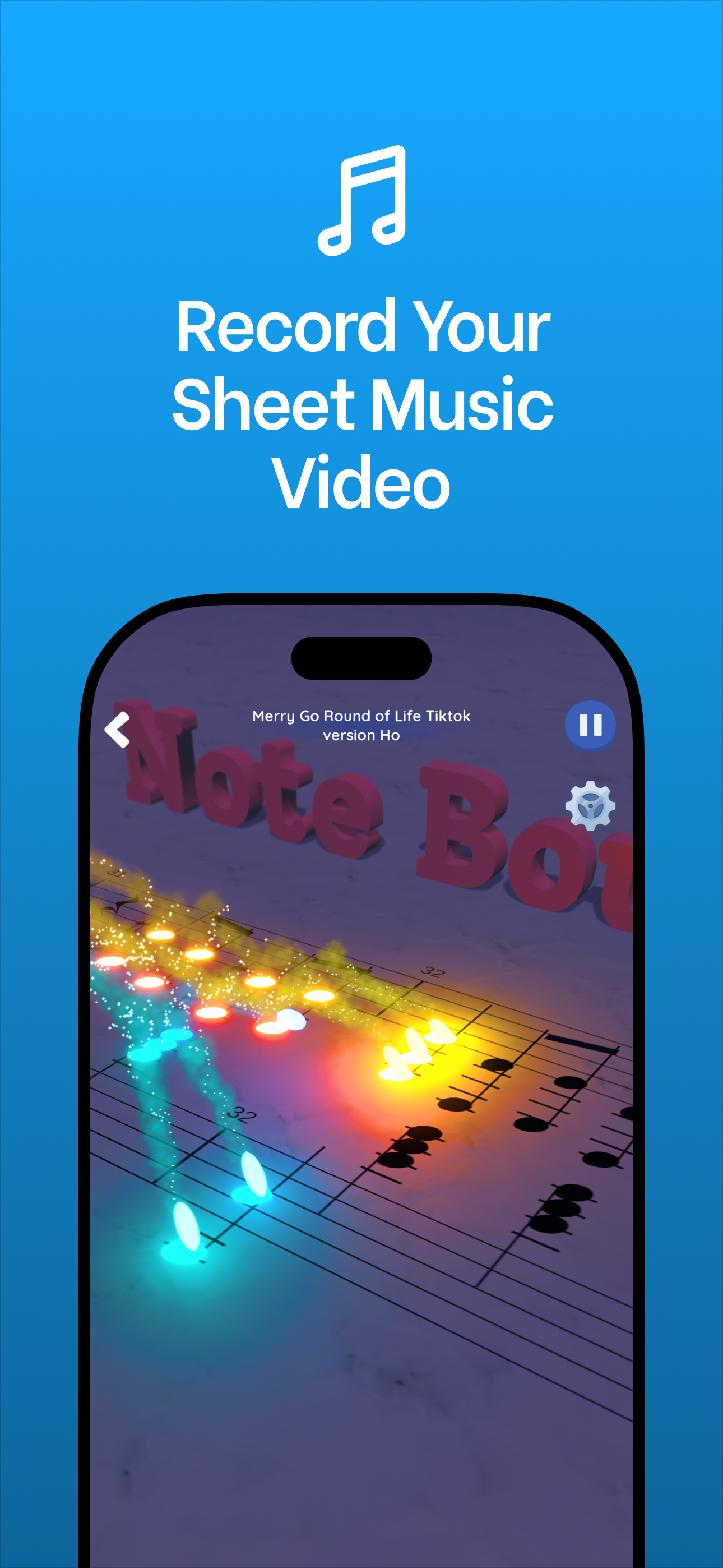
Calm "Study With Me" Piano Videos With Sheet Music
Make calm 3 to 10 minute study-with-me piano videos from slow public-domain pieces, with sheet music on screen and titles that match what people search.
Ode to Joy: The Best First Classical Piece to Read
Read Ode to Joy phrase by phrase: the letter names, why its stepwise five-note range suits beginners, the famous early entrance, and where readers trip.
Sharps, Flats and Naturals: Accidentals Explained Simply
What sharp, flat and natural signs do, how long an accidental lasts, key signatures vs accidentals, enharmonic notes, and Für Elise as a worked example.
How Music Teachers Can Use Short Videos to Boost Practice
Practical ways for music teachers to use short sheet-music videos: weekly read-this challenges, homework clips, offline practice and privacy basics.
Note Bounce vs Synthesia: Falling Notes or Real Sheet Music?
A fair comparison of Synthesia's falling-note piano practice and Note Bounce's sheet-music rhythm game: who each suits, platforms, and using both.
How to Make a "Name the Note" Quiz Video From Sheet Music
Build a short note-reading quiz video from a Note Bounce render: pick the note, freeze it, ask for comments, then turn the answers into a follow-up.
Time Signatures Explained: 4/4, 3/4 and 6/8 for Beginners
What the two numbers in a time signature mean, how to count 4/4, 3/4 and 6/8 out loud, a famous example of each, and a 2-minute clapping drill.
5 Duet and Stitch Ideas for Music Learners on TikTok
Five duet and stitch formats for music learners, built on Note Bounce sheet-music renders, with sample captions plus etiquette and copyright notes.
Moonlight Sonata: How to Read the Famous Opening
Read the Moonlight Sonata's first page: the four-sharp key, cut time, the triplets as chord shapes and the melody in bar 5, then practice it from a MIDI.
What Do the Notes on a Piano Mean? Keys, Letters and the Staff
How piano keys map to the letters A to G, what the black keys are, how octaves and middle C work, and how each key lines up with a spot on the staff.
"Learn With Me": Document Your Sight-Reading Journey
Plan a learn-with-me sight-reading series: one benchmark song, a fixed title format, Day 1, 7, 14 and 30 episodes, and a Day 1 vs Day 30 comparison video.
Spooky Sheet Music Videos for Halloween (Public-Domain Picks)
Make three Halloween sheet music videos this week from public-domain MIDIs: Grieg's Mountain King, the Toccata in D minor and Chopin's Funeral March.
Best Free Apps to Learn to Read Sheet Music (2026)
An honest guide to free and free-to-start apps for reading sheet music, grouped by learning style: drills, piano courses, notation software and a game.
Piano TikTok Without a Piano: 6 Video Ideas for Learners
Six piano TikTok formats a beginner can post without a piano or a camera, from real-time reading to slowed-down versions, each with a sample caption.
How to Read Bass Clef Notes: Mnemonics That Stick
Read bass clef notes fast: why it's the F clef, line and space mnemonics, two landmark notes to anchor on, and a five-note self-test with answers.
Korobeiniki: The Folk Song Behind the Tetris Melody
Korobeiniki began as an 1861 Nekrasov poem and became a Russian folk song before it was the Tetris theme. Learn its history, then read its first phrase.
How to Make Sheet Music Videos for TikTok and Reels
Make 'watch the notes' videos without a camera or a piano: play a level in Note Bounce, render the gameplay, then post it with a caption hook.
How to Learn to Read Sheet Music Faster with a Game
The staff, treble clef notes, EGBDF and FACE, rhythm basics, and why short daily game sessions with instant feedback help you read music faster.