Gymnopédie No. 1: How to Read Satie's Slow Masterpiece
To read Gymnopédie No. 1, count a slow 3/4 and notice that the left hand repeats one pattern for most of the piece: a low bass note on beat one, then a chord on beat two held through beat three. Above that, the right-hand melody floats in long notes, mostly in D major with two sharps (F♯ and C♯), so the main reading work is following the melody and catching a handful of accidentals.
Gymnopédie No. 1 sounds simple, and on the page it nearly is. That makes it a rewarding piece to read: you get a famous, beautiful piece from very little notation. This spotlight covers the background, the left-hand pattern, the melody, and the spots where readers slip.
Background
Erik Satie wrote three Gymnopédies for piano and completed the set in 1888, according to Wikipedia, with the first published that same year. The title refers to a festival dance of ancient Sparta. The set is sometimes described as a forerunner of ambient music.
Satie's tempo marking for No. 1 is Lent et douloureux, "slow and painful". Take the "slow" seriously; it's what makes the piece readable.
The composition is in the public domain. Modern editions, arrangements and recordings may not be, so check the license of any score or MIDI you use.
The left-hand pattern
Almost every bar in the left hand looks the same:
| Beat | What the left hand plays | On the page |
|---|---|---|
| 1 | A single low bass note | A note low on the bass staff, often with ledger lines |
| 2 | A chord in the middle of the keyboard | A stack of three notes higher on the bass staff |
| 3 | The chord keeps sounding | The chord is a half note, so it lasts through beat 3 |
The first bars alternate between two chords, a G major seventh and a D major seventh, as Wikipedia notes. On the page that means two shapes, swapping bar by bar. Once you recognize them, you can read the opening left hand with a glance per bar rather than naming every note.
Reading tip: read the bass note and chord as one event: "low G, then the G chord". The jump between them is wide, but the shapes repeat, so they become familiar quickly.
The melody and the slow count
After the introduction, the right hand enters with a slow, floating line. In most editions it begins:
F♯ – A – G – F♯ – C♯ – B – C♯ – D – A
Most of these are long notes: quarter notes leading into dotted halves that fill a whole bar. With so few notes per bar, you have time to read each one. The F♯ is on the top line of the treble staff, so the melody starts high and drifts downward.
Reading tip: the key signature says every F and C is sharp. The melody leans heavily on F♯ and C♯, so say "F and C are sharp" before you start.
Counting a slow 3/4
Slow pieces are harder to count than fast ones, because the gaps between beats feel long and it's tempting to rush. Count out loud:
ONE two three | ONE two three
and say it slowly enough that the bass note on ONE feels like a gentle step, not a beat. If you're reading along with a moving score, let the score set the pace and resist jumping ahead.
Where the accidentals hide
Gymnopédie No. 1 is mostly in D major, but the second half of the piece moves into darker harmony, and accidentals appear: naturals that cancel the key signature's sharps, and occasional new sharps or flats. Two rules keep you right:
- An accidental lasts only until the bar line. In a piece where each bar has only one or two melody notes, that means it often affects just one note.
- After an accidental, the next bar goes back to the key signature. Many editions add a courtesy accidental as a reminder, but not all do.
Before you read the second half, scan it and circle every accidental.
Gymnopédie No. 1 also makes a calm, slow-moving video. Marble Music (formerly Beat Bounce) turns MIDI files into bouncing-marble music videos where the marble lands on every note, so the same MIDI you read from can become a relaxing clip. Its site hosts more than 1,100 free MIDI files; see the Marble Music MIDI library and check each file's license.
Read it slowly, then try No. 3
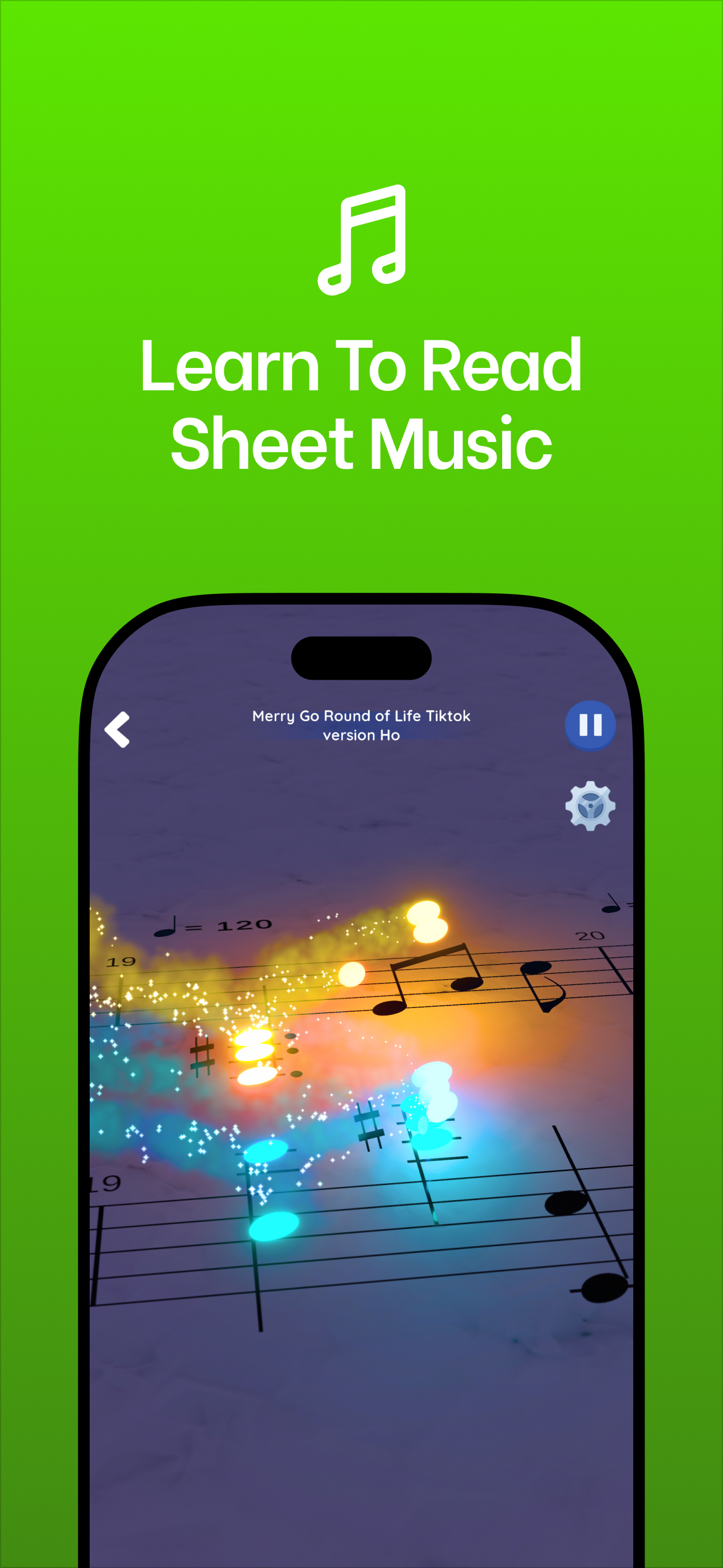
Import a Gymnopédie No. 1 MIDI into Note Bounce to build a custom level. The balls land on real sheet music in time, which suits a slow piece: you watch each note arrive and have time to name it. Start with the opening bars, saying the melody notes out loud as the balls land, then work through the second half once you've circled its accidentals.
Satie wrote two more Gymnopédies in the same style. Once No. 1 reads easily, try No. 3: the same slow 3/4 and repeating left hand, with different harmonies to read. If the low bass notes slow you down, the ledger lines guide helps you name them faster.
Frequently asked questions
Is Gymnopédie No. 1 good for beginners?
It's one of the gentler classical pieces to read, because it's slow and the left hand repeats one simple pattern. The left-hand leaps from a low bass note up to a chord take practice to play, but they're easy to read once you see the pattern.
What does Gymnopédie mean?
The title refers to the gymnopaedia, a dance festival of ancient Sparta. Satie never fully explained his choice of name, and the music itself is calm rather than athletic.

Get Note Bounce
Learn to read sheet music while you play. Free on iOS, Android and Steam.