Rests in Music: How to Read and Count Every Silence
A rest is a symbol for silence, and every note value has a matching rest of the same length: a quarter rest lasts as long as a quarter note, a half rest as long as a half note, and so on. To read rests, learn the five shapes below, then keep counting the beat out loud through each silence so you come back in exactly on time.
Beginners tend to treat rests as a pause button. They aren't. The music keeps moving while you're silent, and a rest that's cut short or stretched throws off everything after it. If note values themselves are still new, start with the beginner's guide to reading sheet music, then come back to fill in the silences.
The five rests you'll meet first
This table assumes a time signature with 4 on the bottom (4/4, 3/4, 2/4), where a quarter note gets one beat.
| Rest | What it looks like | Length | Matching note |
|---|---|---|---|
| Whole rest | Filled block hanging down from the 4th line | 4 beats, or a full bar | Whole note |
| Half rest | Filled block sitting on the middle line | 2 beats | Half note |
| Quarter rest | Vertical squiggle, like a lightning bolt | 1 beat | Quarter note |
| Eighth rest | Slanted stem with one small flag, like a 7 | 1/2 beat | Eighth note |
| Sixteenth rest | Slanted stem with two flags | 1/4 beat | Sixteenth note |
The pattern for the short rests is easy to extend: each extra flag halves the length, just like the flags on notes. A thirty-second rest has three.
Whole rest vs half rest: the one that trips everyone
The whole and half rests are the same small rectangle, and the only difference is position. Use one of these memory tricks:
- Hole vs hat. The whole rest hangs below the line like a hole in the ground. The half rest sits on the line like a hat.
- Heavy hangs. The whole rest is longer, so it's "heavier" and hangs down. The lighter half rest sits on top.
Check the line, too. The whole rest hangs from the fourth line (counting up from the bottom), and the half rest sits on the third, middle line. If you can see the block's flat side touching the line above it, it's a whole rest.
The whole rest has a special job
A whole rest alone in a bar means "rest for the entire bar", no matter what the time signature is. In 3/4 it lasts three beats, and in 2/4 it lasts two. Composers use it this way because it's the clearest way to say "this bar is empty", so don't add up beats when you see it by itself.
Two more silence markings show up in longer pieces:
- Multi-measure rest. A thick horizontal bar across the middle of the staff with a number above it means "rest for that many full bars". Count each bar out loud: "1-2-3-4, 2-2-3-4, 3-2-3-4", using the first number to track which bar you're in.
- Fermata over a rest. The curved "eye" symbol means hold the silence longer than written, until the conductor or your own sense of timing moves on.
Dots work on rests the same way they do on notes: a dot adds half the rest's value, so a dotted half rest lasts three beats.
How to count through a rest
Silence is where most rhythm mistakes happen, because there is nothing to play to keep you honest. This routine fixes that:
- Say every beat, including the silent ones. Count "1-2-3-4" all the way through. Some players say "rest" on silent beats ("1-2-rest-4") until it's automatic.
- Lift your hands or stop your voice on the rest. A rest means the sound actually stops. Don't let the previous note ring through it.
- Subdivide short rests. For eighth and sixteenth rests, count "1-and-2-and" or "1-e-and-a" so you know exactly which half or quarter of the beat is silent.
- Prepare during the rest. Use the silence to look ahead and find your next note. That's what experienced readers are doing when a rest comes up.
Worked example: a famous symphony that starts with silence
The opening of Beethoven's Fifth Symphony, the short-short-short-long figure, is in 2/4 and begins with an eighth rest. The first bar is an eighth rest followed by three eighth notes, and the long note comes in the second bar.
Count the first bar as "1-and-2-and":
- On "1" there is silence: that's the eighth rest.
- The three short notes land on "and", "2" and "and".
- The long note arrives on "1" of the next bar.
(For the rest of that opening, including its fermatas, see the Beethoven's Fifth reading guide.) If you skip the rest and start on beat one, the motif still sounds similar, but every note lands half a beat early and the accent moves. Clap the bar a few times with your count out loud, leaving beat one silent. Feeling that empty downbeat is the whole skill of reading rests in miniature.
Practice seeing and hearing the gaps
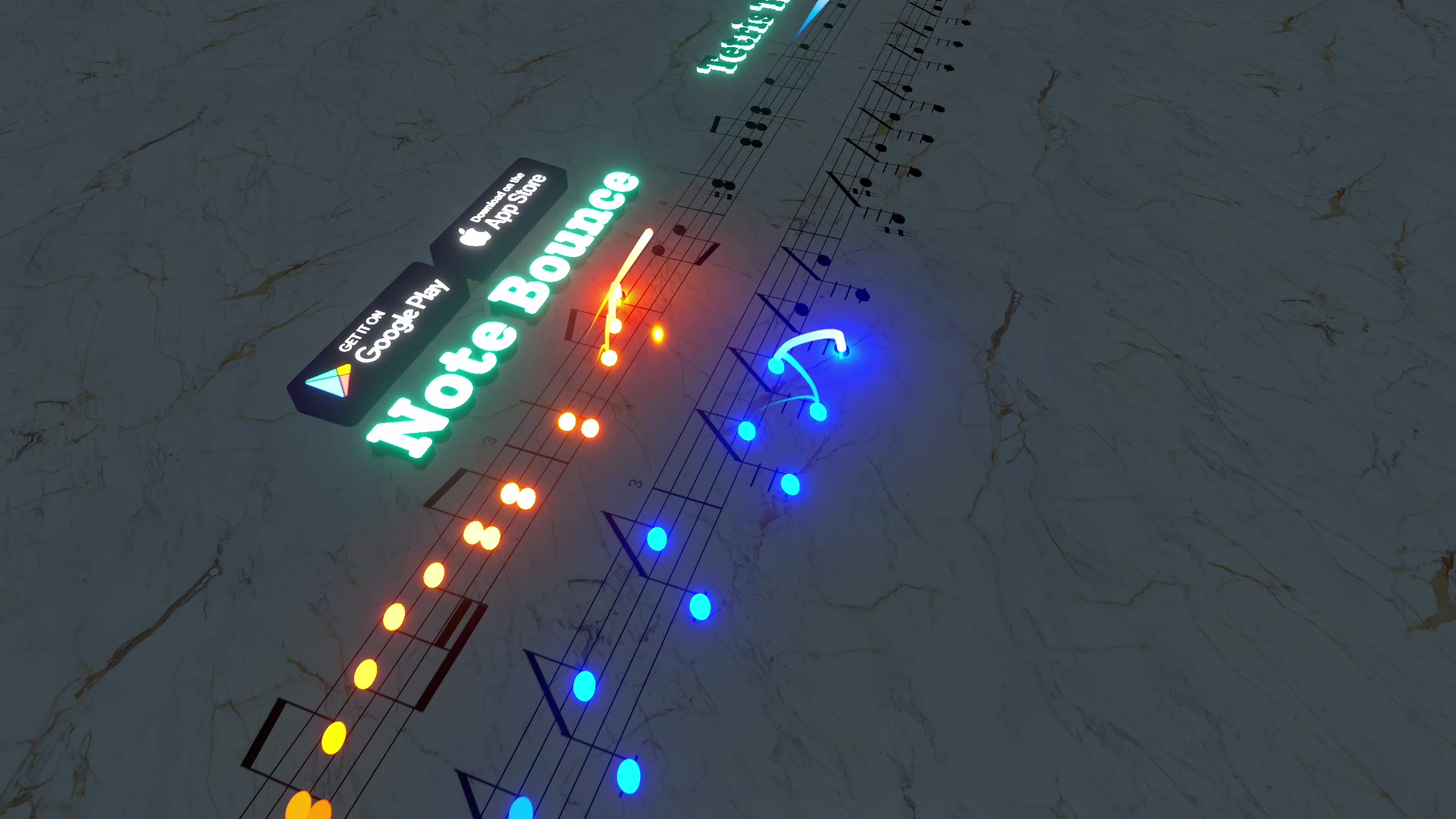
Rests are easier to read when you can see the beat continue through them. In Note Bounce, balls land on the notes of real sheet music in time, so a rest shows up as a gap where the music keeps moving and nothing lands. Import a MIDI of a public-domain piece with clear rests, such as the Fifth Symphony opening, to build your own level and count the silent beats out loud as you play.
To hear how silence shapes a groove, try RingLoop, where every song is built from concentric rings and each ring you clear in time adds its instrument to the mix. As the layers stack up, you can hear how one part's rests leave space for another part to answer. Try it at RingLoop.
Your five-minute rest drill
Write four bars of 4/4 on scrap paper using only quarter notes and quarter rests, then clap them at a slow tempo while counting out loud. Next, swap in a half rest, then an eighth rest followed by an eighth note. When you can clap all four bars twice in a row without the count wobbling, look for the rests in the next piece you read and give each one its full length.
Frequently asked questions
How do you tell a whole rest from a half rest?
Both are small filled rectangles. The whole rest hangs down from the fourth line of the staff, and the half rest sits on top of the middle line. A common memory trick is that the heavier whole rest hangs like a hole, while the half rest sits like a hat.
Does a whole rest always mean four beats?
No. A whole rest on its own in a bar means silence for the whole bar, whatever the time signature, so in 3/4 it lasts three beats.
What does a rest with a number above it mean?
That is a multi-measure rest. The thick horizontal bar shows a stretch of silent bars, and the number tells you how many full bars to count before you play again.

Get Note Bounce
Learn to read sheet music while you play. Free on iOS, Android and Steam.