How to Learn to Read Sheet Music Faster with a Game
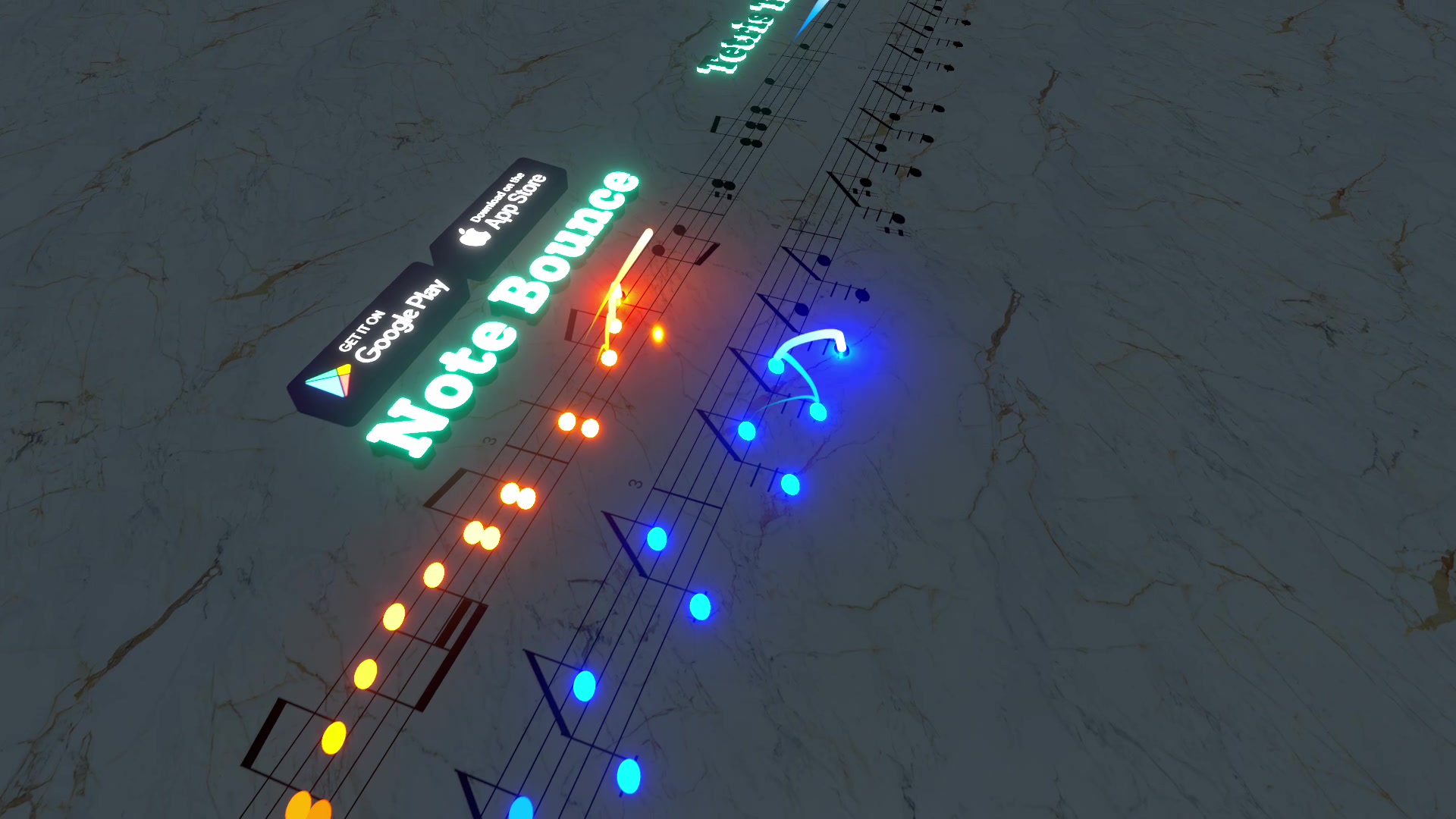
Reading sheet music feels like learning a new alphabet, because it is one. The good news: the alphabet is tiny. There are only seven letter names, five lines and four spaces to learn before you can read a simple melody. What slows most people down is not difficulty but practice: flashcards are dull, and long sessions are easy to skip.
This guide covers the basics you actually need, then shows how short, game-based practice helps the notes stick.
The staff: five lines, four spaces
Music is written on a staff (or stave): five horizontal lines with four spaces between them. Each line and each space stands for one pitch. The higher a note sits on the staff, the higher it sounds.
Notes use the letters A B C D E F G, then the pattern repeats. Moving from a line to the next space (or from a space to the next line) moves you up by one letter. That one rule lets you work out any note from a note you already know.
The treble clef and its notes
The symbol at the start of the staff is the clef. It tells you which pitches the lines and spaces mean. The treble clef (also called the G clef) is used for the right hand on piano, and for violin, flute, guitar and singing. Its curl wraps around the second line from the bottom, marking that line as G.
From the bottom up:
| Position | Notes | Mnemonic |
|---|---|---|
| Lines | E, G, B, D, F | Every Good Boy Does Fine |
| Spaces | F, A, C, E | Spells FACE |
Two more landmarks are worth memorising early:
- Middle C sits on a short extra line (a ledger line) just below the staff.
- D hangs just below the bottom line, and G sits just above the top line.
Tip: mnemonics get you started, but don't recite "Every Good Boy..." for every note. Learn a few landmark notes (middle C, the G line, the top-line F) and read the rest as steps and skips from them.
Rhythm basics
Pitch is only half of reading music. The other half is how long each note lasts. In the most common time signature, 4/4, there are four beats in every bar:
| Note | Looks like | Beats in 4/4 |
|---|---|---|
| Whole note | Open oval, no stem | 4 |
| Half note | Open oval with a stem | 2 |
| Quarter note | Filled oval with a stem | 1 |
| Eighth note | Filled oval with a stem and a flag | 1/2 |
The time signature at the start of a piece shows two numbers. The top number is how many beats are in a bar; the bottom number is which note gets one beat (4 means a quarter note). Every note value also has a matching rest, a symbol for silence of the same length.
Count out loud ("1 and 2 and 3 and 4 and") while you clap a rhythm, and rhythm reading gets much easier.
Why game-based practice helps
Knowing the rules is the easy part. Reading quickly comes from seeing the same patterns again and again until you recognise them at a glance. Two things make that repetition work:
- Short daily sessions. Ten focused minutes a day beats an hour once a week. Frequent practice keeps note names fresh, and a game makes it much easier to actually show up every day.
- Immediate feedback. When you get a note wrong on a flashcard app, you find out later, or not at all. In a game, you find out instantly, so you correct the mistake while it still matters.
A game also puts notes in context. Instead of single notes on a blank card, you read real melodies, with real rhythm, the way you will meet them on an actual score.
How Note Bounce fits in
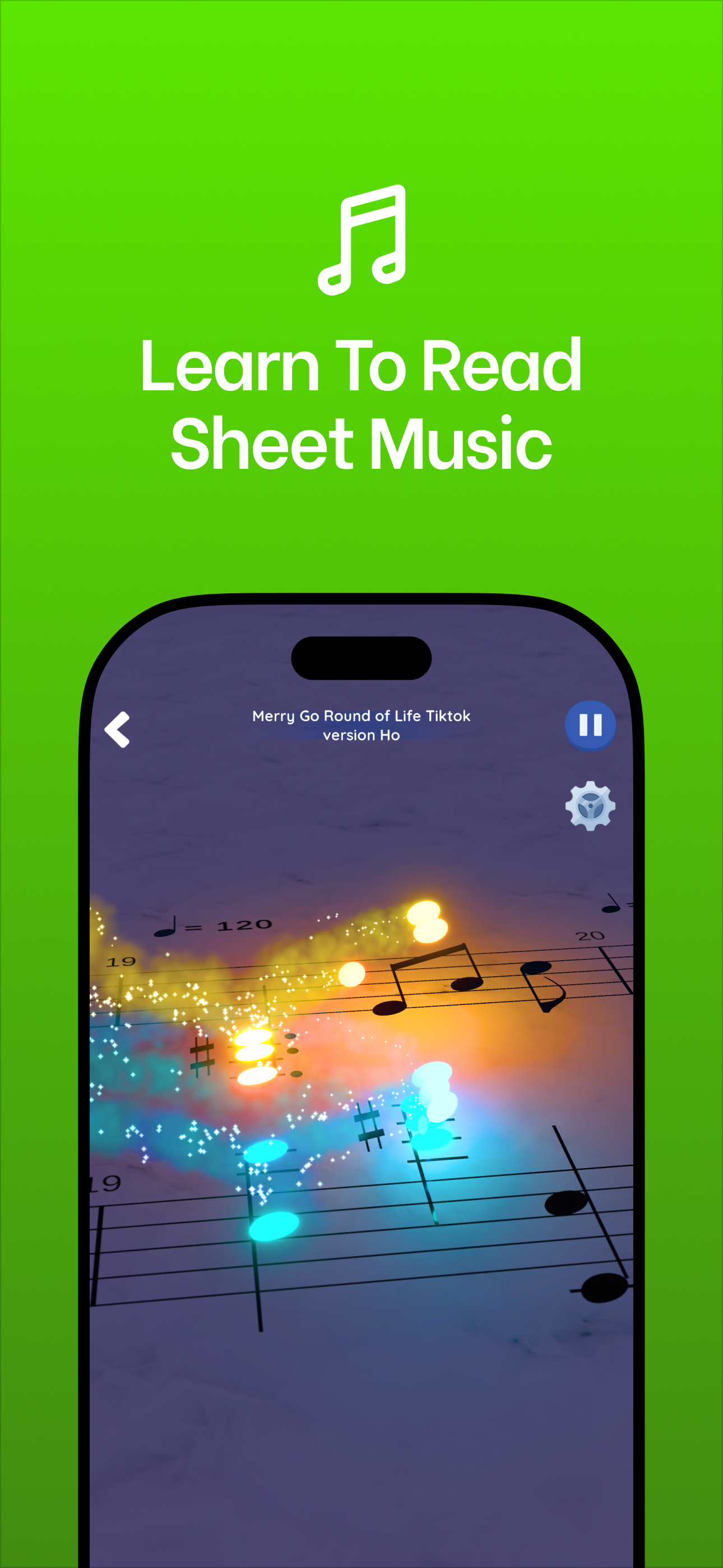
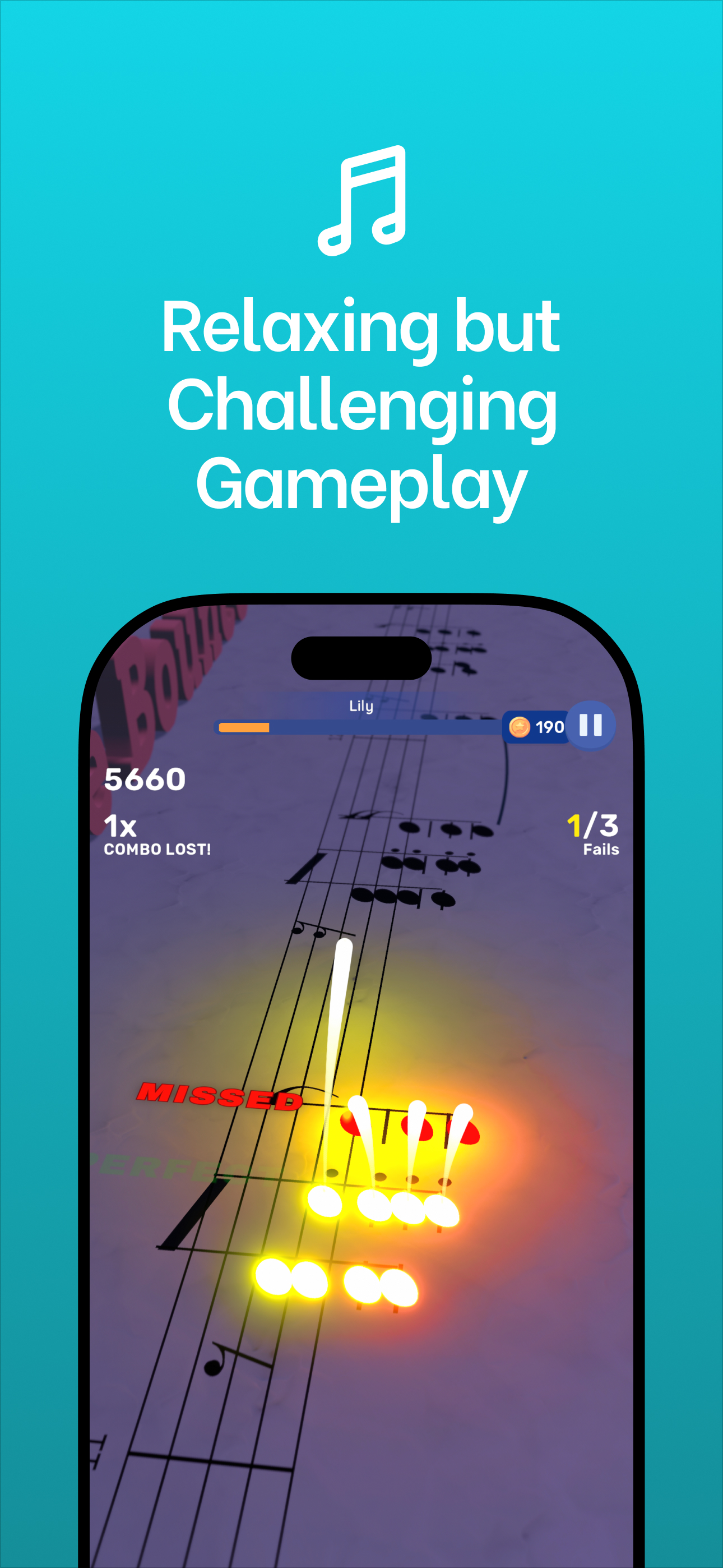
Note Bounce is a sheet-music rhythm game built around exactly this idea. Bouncing balls land on real notes on the staff, and you tap the correct notes at the right moment to match the rhythm. Every level is real sheet music, so you are reading notes and rhythm the whole time you play.
A few things make it a good fit for daily reading practice:
- Piano and classical songs. You play along to relaxing piano and orchestral music, so practice feels like playing, not drilling.
- Works offline. Note Bounce needs no internet connection, so a quick session on the bus or on a flight is easy.
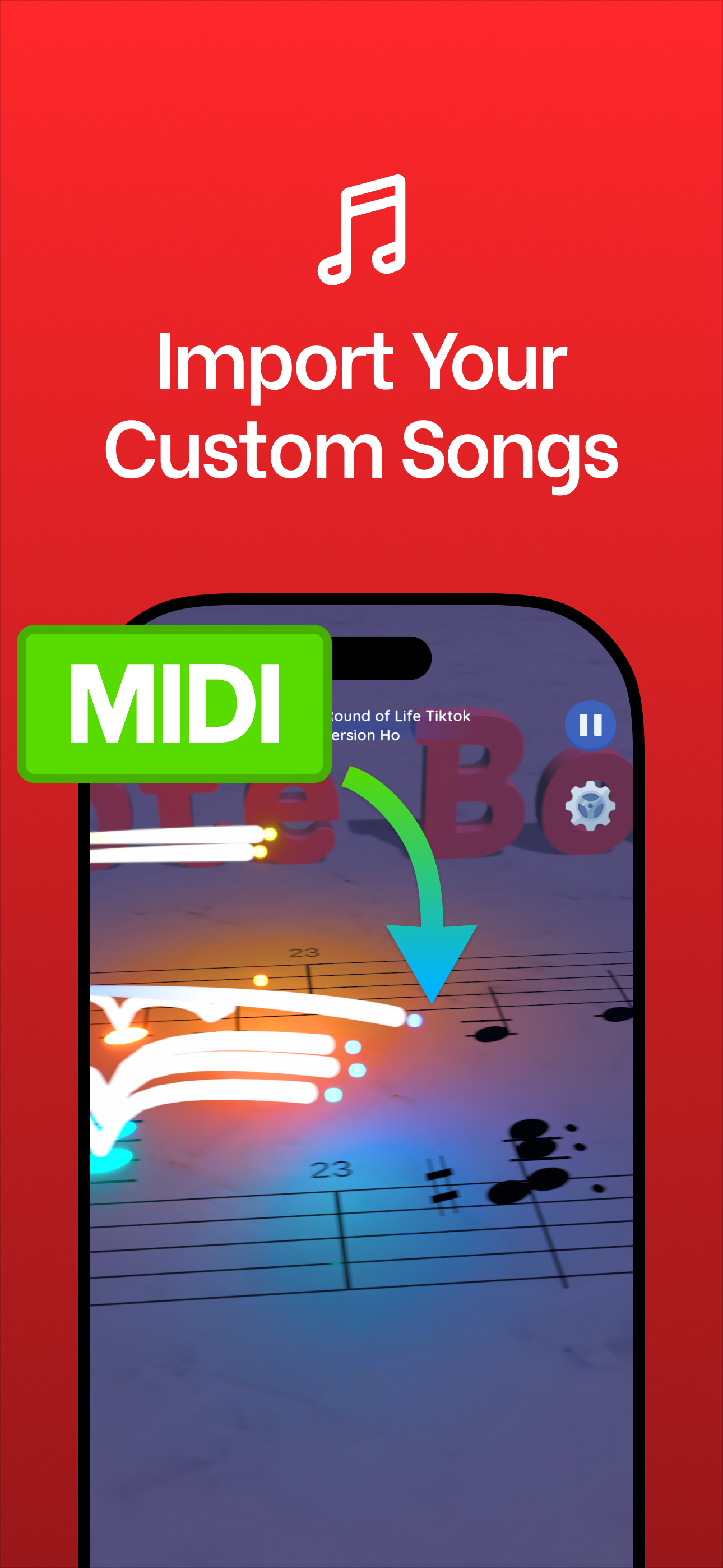
- MIDI import. Import MIDI files to build your own levels, so you can practise reading the exact pieces you are learning.
- Shareable videos. You can render your gameplay as a video to share.
A simple 10-minute routine
- Two minutes: name the treble clef lines and spaces out loud, from the bottom up.
- Three minutes: clap and count one short rhythm in 4/4.
- Five minutes: play a level or two in Note Bounce, saying the note names in your head as the balls land.
Repeat it every day for a couple of weeks. Most people are surprised how quickly the staff starts to read like words instead of letters.
Frequently asked questions
How long does it take to learn to read sheet music?
Most beginners can name the treble clef notes within a week or two of short daily practice. Reading fluently at tempo takes longer, and it improves fastest with a little practice every day rather than one long session a week.
Can a game really teach me to read music?
A game can't replace a teacher, but it is a great way to drill the basics. In Note Bounce, bouncing balls land on real notes on the staff, so you keep seeing real notation and rhythm while you play piano and classical songs.
Is Note Bounce free, and does it work offline?
Yes. Note Bounce is free to download on iOS, Android and Steam, with optional in-app purchases, and it needs no internet connection to play.

Get Note Bounce
Learn to read sheet music while you play. Free on iOS, Android and Steam.