Note Flashcards vs Rhythm Games: Which Builds Reading Faster?
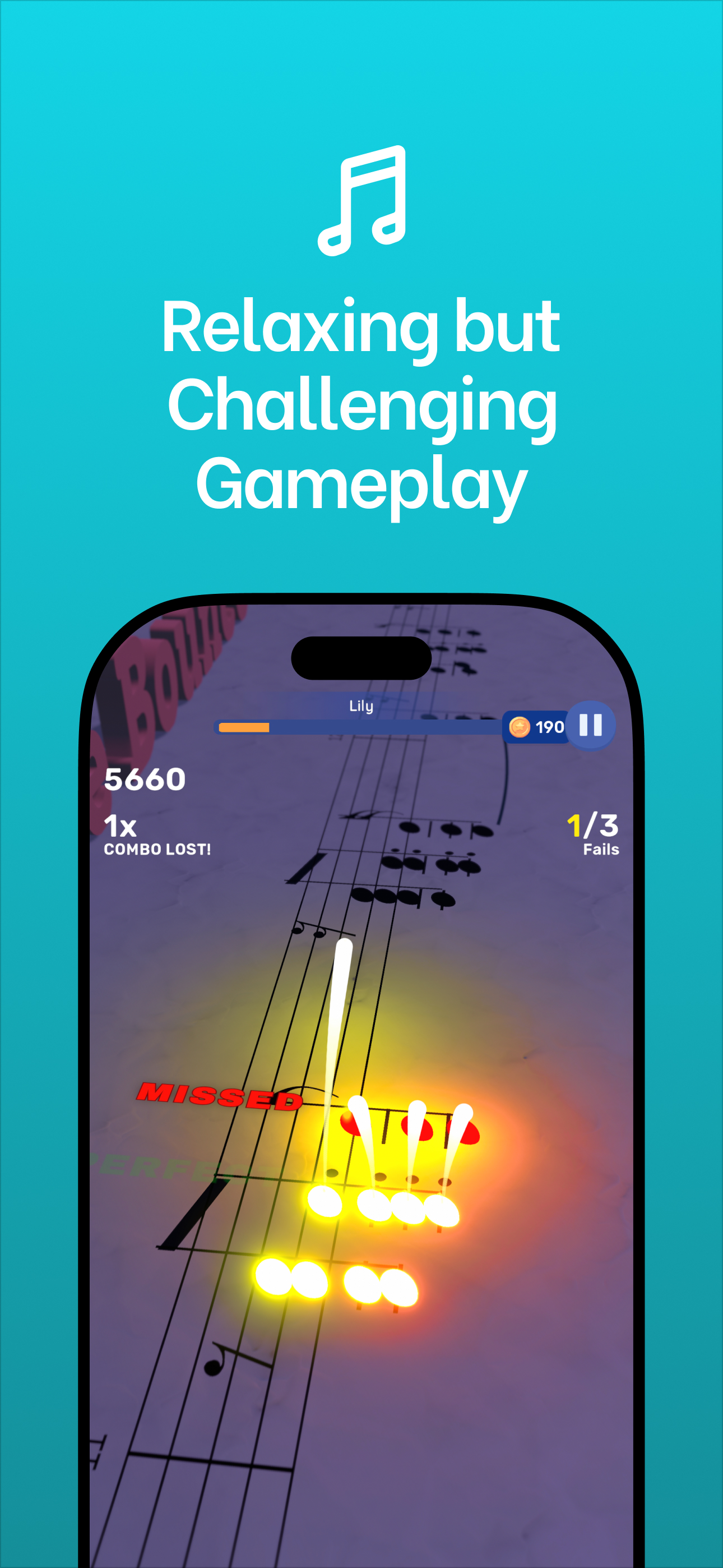
Flashcard drills and rhythm games train different parts of note reading. Flashcards build instant recognition of single notes, which is the fastest way to stop counting lines. Rhythm games that use real sheet music train reading notes in order and in time, which is what reading actual music requires. If you're starting out, use flashcards for a few minutes to learn the notes, then spend most of your practice reading real music, for example in a game.
This is not a ranking. Both approaches are useful, and the right mix depends on where you're stuck. Below is what each one trains, where each falls short, and a simple weekly plan that uses both.
What we mean by each
Flashcard drills show one note at a time and ask you to name it, by tapping a button or playing it on an instrument. Two well-known examples:
- Tenuto, by musictheory.net, is an iOS app with 24 customizable exercises, including note, key signature and interval identification, according to its App Store listing. musictheory.net also has free exercises on its website.
- Note Rush is a note-reading game on the App Store that listens through your device's microphone as you play each note and gives instant feedback, with preset levels for piano and other instruments.
Rhythm games with real notation show a line of music moving in time and ask you to keep up. In Note Bounce, balls land on the notes of real sheet music as the song plays, so you read pitch and rhythm together, in pieces rather than single notes.
Check each store page for current prices and platforms before you choose. For a wider survey of drill apps, courses and notation software, see the best free apps to learn to read sheet music.
What each one trains
| Skill | Flashcard drills | Rhythm games with real notation |
|---|---|---|
| Naming a single note instantly | Strong | Moderate |
| Reading notes in sequence | Weak | Strong |
| Rhythm and note lengths | Usually not trained | Trained in every song |
| Seeing patterns (steps, leaps, repeats) | Weak | Strong |
| Playing the note on an instrument | Strong in apps that listen, like Note Rush | Depends on the game |
| Staying motivated day to day | Depends on the person | Songs give a built-in goal |
The pattern is clear: flashcards isolate one skill and drill it hard. Games trade some of that focus for context, rhythm and music.
Where each one shines, and where it falls short
Flashcards
Flashcards are hard to beat for the first stage of learning. If you have to count up from the bottom line every time you see a note, you can't read music at any speed. A few minutes of drilling each day turns "E, G, B... so it's D" into "D".
They're also good for targeted fixes. If you always confuse the notes on the top two lines, a drill set to just those notes fixes the problem faster than hoping it comes up in a song.
Where they fall short: music doesn't arrive one note at a time. Real reading means seeing groups: a step up, a jump of a third, a repeated note, a scale run. Flashcards show none of that. They also leave out rhythm, which is half of what's on the page.
Rhythm games with real notation
Reading real music in time forces your eyes forward. You can't stop to count lines when the next note is already arriving. Over time, that pressure teaches you to read shapes: "that's the same pattern a step higher" instead of eight separate notes.
You also get rhythm practice for free. Every quarter note, dotted note and rest is part of the song, so you learn how note lengths feel, not just what they're called.
And songs are motivating in a way that flashcards often aren't. Finishing a piece you recognize is a clearer reward than a score on a drill.
Where they fall short: if you don't know the note names yet, a moving piece is overwhelming. You end up guessing or following the motion without really reading. That's why the foundation from flashcards, or a guide like the beginner's guide to reading sheet music, comes first.
Which to use, by situation
- "I don't know the note names yet." Start with the lines and spaces, then flashcards for a week or two.
- "I know the names but read slowly." Shift most practice to reading real pieces. Speed comes from seeing patterns.
- "I keep missing the same notes." Use a drill set to just those notes for a few days.
- "I can name notes but my rhythm is shaky." Choose practice with rhythm built in, such as a rhythm game or clapping exercises.
- "I get bored and skip practice." Use songs. Practice you actually do beats a perfect plan you skip.
A simple weekly mix
- Every day, 3 minutes of flashcards. Focus on the notes you're slowest on.
- Every day, 10 minutes of real music. Play a few songs in Note Bounce, naming notes out loud as the balls land. Use MIDI import to build levels from pieces you want to learn.
- Once a week, one new piece. Choose something slightly harder: a new key, a wider range or a new time signature.
- Once a week, check your drill score. If single-note recognition is fast and accurate, cut the flashcard time and add more music.
Reading is about the eyes, but music is also heard. On a rest day, RingLoop gives your eyes a break while you still practice timing: each song is a set of concentric rings, and clearing a ring in time adds its instrument to the mix, so you hear how the parts build a full song.
The bottom line
Flashcards teach you the alphabet. Real music teaches you to read sentences. Use the first until single notes are automatic, then spend most of your time on the second.
For the "real music" part, Note Bounce puts that habit into a game: balls bounce onto real sheet music in time, so every session is reading notes and rhythm together. Pick one piece you know, import its MIDI as a level, and read it out loud tomorrow.
Frequently asked questions
Are flashcards good for learning to read music?
Yes, for one specific skill: recognizing single notes instantly. They don't train rhythm or reading a moving line of music, so they work best alongside reading real pieces.
Can a game teach you to read sheet music?
A game that uses real notation can give you lots of reading practice in context, with rhythm included. It won't replace a teacher or practice on an instrument, but it can make daily reading practice easier to stick with.
Get Note Bounce
Learn to read sheet music while you play. Free on iOS, Android and Steam.