Turkish March (Rondo alla Turca): How to Read the Opening
To read the opening of Mozart's Turkish March, count in 2/4 (two quarter-note beats per bar), read the first figure as a turn around one note (B, A, G♯, A) rather than four separate notes, and remember that the A-minor section adds G♯ and D♯ as accidentals. The same turning shape repeats on higher notes, so once you can read the first bar, the next two follow the same pattern.
The Turkish March, the third movement of Mozart's Piano Sonata No. 11, is one of the most recognized piano pieces ever written. It looks busy on the page because of all the sixteenth notes, but it's built from a few repeating shapes. This spotlight walks through those shapes, the accidentals, and the louder refrain.
Background
According to Wikipedia, the Piano Sonata No. 11 in A major, K. 331, was composed in 1783 and published in 1784. Its third movement, marked Alla turca – Allegretto, is often played on its own as the "Rondo alla Turca" or "Turkish March". Its refrain imitates the sound of Turkish Janissary bands.
The movement is usually described as a rondo, laid out roughly A–B–C–B–A–B plus a coda, with the B section as the refrain. Musical form for readers explains how rondos work. The composition is in the public domain; modern editions and recordings may not be, so check the license of any score or MIDI you use.
The map
| Section | Key | What it sounds like | Reading focus |
|---|---|---|---|
| A | A minor | Light, turning sixteenth notes | Turn figures, G♯ and D♯ |
| B (refrain) | A major | Loud, march-like, drum-like bass | Three sharps, chords and octaves |
| C | F-sharp minor | Fast running notes | Accidentals, steady sixteenths |
| Coda | A major | The grand finish | Broken chords |
Start with section A. It's what people recognize, and it teaches the turn figure you'll use throughout.
Counting 2/4
The time signature is 2/4: two quarter-note beats per bar. Most of the A section moves in sixteenth notes, four per beat:
ONE-e-and-a TWO-e-and-a
Counting "e-and-a" between beats keeps the sixteenths even. A slow, even count matters more than speed, because the most common problem with this piece is rushing.
Section A, step by step
Bar 1: the turn
The opening is a pickup of four sixteenths, then an eighth note:
B – A – G♯ – A | C
Look at the shape: start on B, step down to A, down a half step to G♯, back up to A. That's a turn around A. Then the melody jumps up to C. Read the four sixteenths as one gesture: "turn around A", not "B, A, G sharp, A".
Bars 2–3: the same turn, higher
The next figure is the same shape a step higher, a turn around C:
D – C – B – C | E
Then a turn around E, which needs an accidental:
F – E – D♯ – E
Recognizing the repeat is the key to reading this piece quickly. Three bars, one shape, moving up each time.
Bar 4 onward: the descent
After the turns climb, the melody comes back down: B, A, G♯, A, B, A, G♯, A, and lands on a longer C. The left hand plays short, detached chords under all of this.
The accidentals
A minor has no sharps or flats in its key signature, so every sharp in section A is written as an accidental:
| Note | Where | Why |
|---|---|---|
| G♯ | The turn around A | Leading note of A minor, pulling up to A |
| D♯ | The turn around E | Gives the E turn the same half-step shape as the A turn |
Each accidental lasts only to the bar line. The turn shape always has a half step below the main note, so if a turn sounds "flat", check whether you missed a sharp.
The refrain: three sharps and a drum
The B section switches to A major, and the key signature now has three sharps: F♯, C♯ and G♯. Say them out loud before you start.
The left hand plays fast broken chords or repeated octaves that imitate drums and cymbals. On the page, they look dense, but they repeat bar after bar. Read the chord once, then recognize it. The right hand plays a strong, march-like melody, often in octaves, on the beat.
Practice it as a game
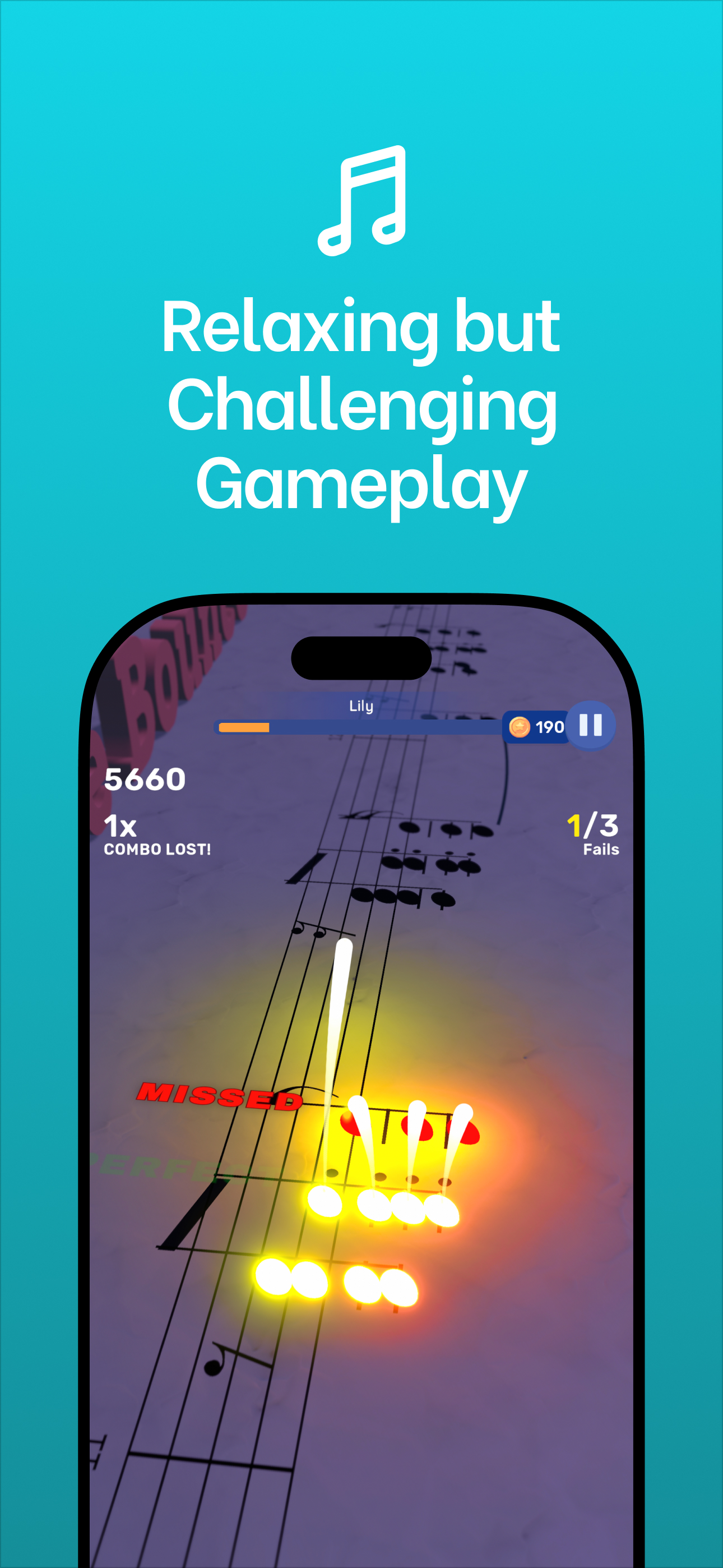
Import a Turkish March MIDI into Note Bounce to build a custom level, then play section A slowly first. The balls land on real sheet music in time, so you can watch the turn shape repeat and climb. Say "turn around A, turn around C, turn around E" out loud as the patterns go by; it trains you to read shapes instead of single notes.
If you need a refresher on the staff first, the beginner's guide to reading sheet music covers the lines and spaces.
Once section A reads smoothly at a slow tempo, move to the refrain. Its notes are bigger and louder, but the reading is simpler: one chord shape, repeated.
The Turkish March's quick, turning notes also make a lively marble video. Marble Music (formerly Beat Bounce) turns MIDI files into bouncing-marble music videos where the marble lands on every note, and renders them for TikTok, Reels and YouTube Shorts. Its free library of more than 1,100 MIDI files includes a Turkish March file; as with any arrangement, check its license before posting. Browse the Marble Music MIDI library.
Frequently asked questions
Is the Turkish March hard to read?
The notes themselves follow clear, repeating patterns, so it's readable for an intermediate learner. The challenge is speed: the sixteenth notes go by quickly, so practice reading it slowly before playing at tempo.
Why is it called the Turkish March?
Mozart marked the movement Alla turca, "in the Turkish style". Its refrain imitates the sound of Ottoman Janissary military bands, which were fashionable in Vienna at the time.

Get Note Bounce
Learn to read sheet music while you play. Free on iOS, Android and Steam.