"Learn With Me": Document Your Sight-Reading Journey
To document your sight-reading journey as a "learn with me" series, pick one benchmark song, record yourself reading it on Day 1, and come back to the same song on Days 7, 14 and 30 under the same title format. On Day 30, cut Day 1 and Day 30 side by side, so viewers can see the change without having to take your word for it.
A single "I'm learning to read music" post is easy to scroll past. A series is different, because each episode gives a viewer who watched the last one a reason to look for the next. This post is about planning that series as a whole: what stays fixed, what changes, and how to make the final comparison land. If you need a refresher on the notes themselves first, the beginner's guide to reading sheet music covers the staff, the treble clef and rhythm basics.
Pick one benchmark song and freeze it
The benchmark is the piece you return to at every milestone. It is the backbone of the series, so choose it carefully and then don't change it.
- Slightly too hard on Day 1. If you can already play it cleanly, there is nothing to show by Day 30. If it is far beyond you, Day 30 will still look like a struggle. Aim for a piece where you can follow the first phrase but lose your place after that.
- Recognizable. A tune viewers already know makes your progress easier to hear. Public-domain melodies work well: Beethoven's Ode to Joy, Grieg's In the Hall of the Mountain King, or Korobeiniki, the folk melody known as the Tetris theme.
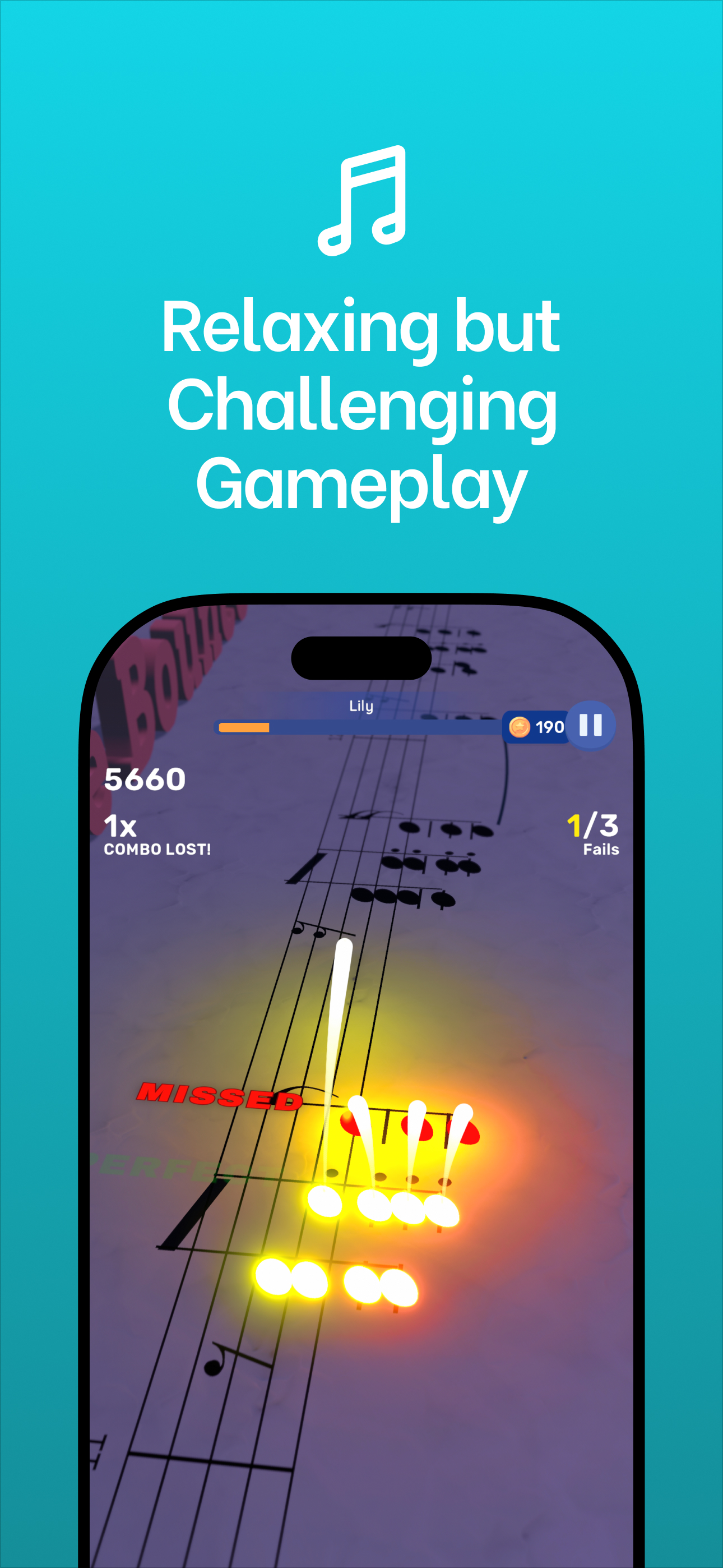
- Easy to repeat exactly. Import the MIDI into Note Bounce once to build a custom level, and play that same level every time. Changing the file, the arrangement or the section you clip would make the comparison meaningless.
Write down which file you used and which seconds of the run you will clip. A note on your phone is enough; the point is that Day 30 uses the same setup as Day 1.
Set a title format you never change
A consistent title tells viewers instantly that a post belongs to the series, and it makes episodes easy to find later. Pick a pattern with three parts: the series name, the day number, and the piece.
- On-screen title: "Learning to sight-read: Day 7 / Ode to Joy"
- First caption line: "Day 7 of reading the same song until I can play it cleanly."
Use the exact wording every time, including the capitalization and the separator. Put the day number in the same corner of the screen in each episode too, so a viewer can line up two clips at a glance.
The four milestone episodes
Between milestones you can post whatever you like. These four are the ones the series is built on.
| Episode | What to record | Sample on-screen line |
|---|---|---|
| Day 1 | First attempt at the benchmark, no warm-up, misses included | "Day 1. I can't read this yet." |
| Day 7 | Same section, plus one thing you now recognize on the staff | "Day 7. I can see the steps now." |
| Day 14 | Same section at the same speed, ideally further before the first miss | "Day 14. Halfway. Still the same song." |
| Day 30 | Your best clean run, then the comparison (next section) | "Day 30. Here is Day 1 next to it." |
What to say in each episode
The story is what connects the episodes, so give each milestone one specific detail:
- Day 1: name the moment you got lost. "I lost my place at the first leap."
- Day 7: name one pattern you now spot. "The first phrase walks up one step at a time."
- Day 14: be honest about plateaus. If Day 14 looks like Day 7, say so and say what you are changing.
- Day 30: name the single biggest difference you hear, then let the video show it.
Keep your own notes on what you practiced each day. A short log makes these captions easy to write and keeps the story accurate.
Build the Day 1 vs Day 30 comparison
This is the episode the whole series leads to. Render both runs from Note Bounce, then assemble them in any phone video editor:
- Trim both clips to the same section, starting on the same first note.
- Stack them top and bottom, or play Day 1 first and Day 30 straight after.
- Label each half with the day number in the same spot you used all month.
- Pick one audio track. Two runs playing at once turn into noise. Use Day 1 audio for the first few seconds, then switch to Day 30.
- Keep it short. One phrase from each run is enough for the difference to show.
Sample caption: "Same song, same section, 29 days apart. Day 1 on top."
No format guarantees views, and a comparison will not show a dramatic jump for everyone. That is fine. An honest small improvement is still a story other learners relate to.
Keep the days in between light
Thirty days of practice does not need thirty serious posts. Mix in short, low-effort episodes so the series stays fun for you and for viewers: a note-naming question, a clip of a new piece, or a quick break from reading altogether.
For a weekly "fun break" episode, try RingLoop. Every song is a set of rings, and clearing a ring in time adds its instrument to the mix until the whole song plays, which makes a satisfying clip to post between reading days. It renders portrait video for Reels and Shorts, with a "perfect loop" option so the clip repeats seamlessly.
Record your Day 1 today
Choose the benchmark piece, import its MIDI into Note Bounce, and play it once without practicing first. Render that run, put "Day 1" on screen in your fixed title format, and post it. Then set a reminder for Day 7. The series starts with an attempt you are not proud of yet, and that is exactly what makes Day 30 worth watching.
Frequently asked questions
How long does it take to learn to sight-read?
There is no fixed timeline. It depends on how often you practice, how much you read each day, and where you start, so a short daily session tends to matter more than the total number of weeks.
What should I post on day 1?
Post your first honest attempt at your benchmark piece, mistakes included, with the series title on screen. Day 1 is the reference point every later episode is compared to, so it should show where you really start.
Get Note Bounce
Learn to read sheet music while you play. Free on iOS, Android and Steam.